Brain Health, Memory Changes, and Alzheimer’s Part One: Understanding the Basics and Protecting Your Brain
SENIOR PRIMETIME | REAL PEOPLE. REAL CONVERSATIONS.
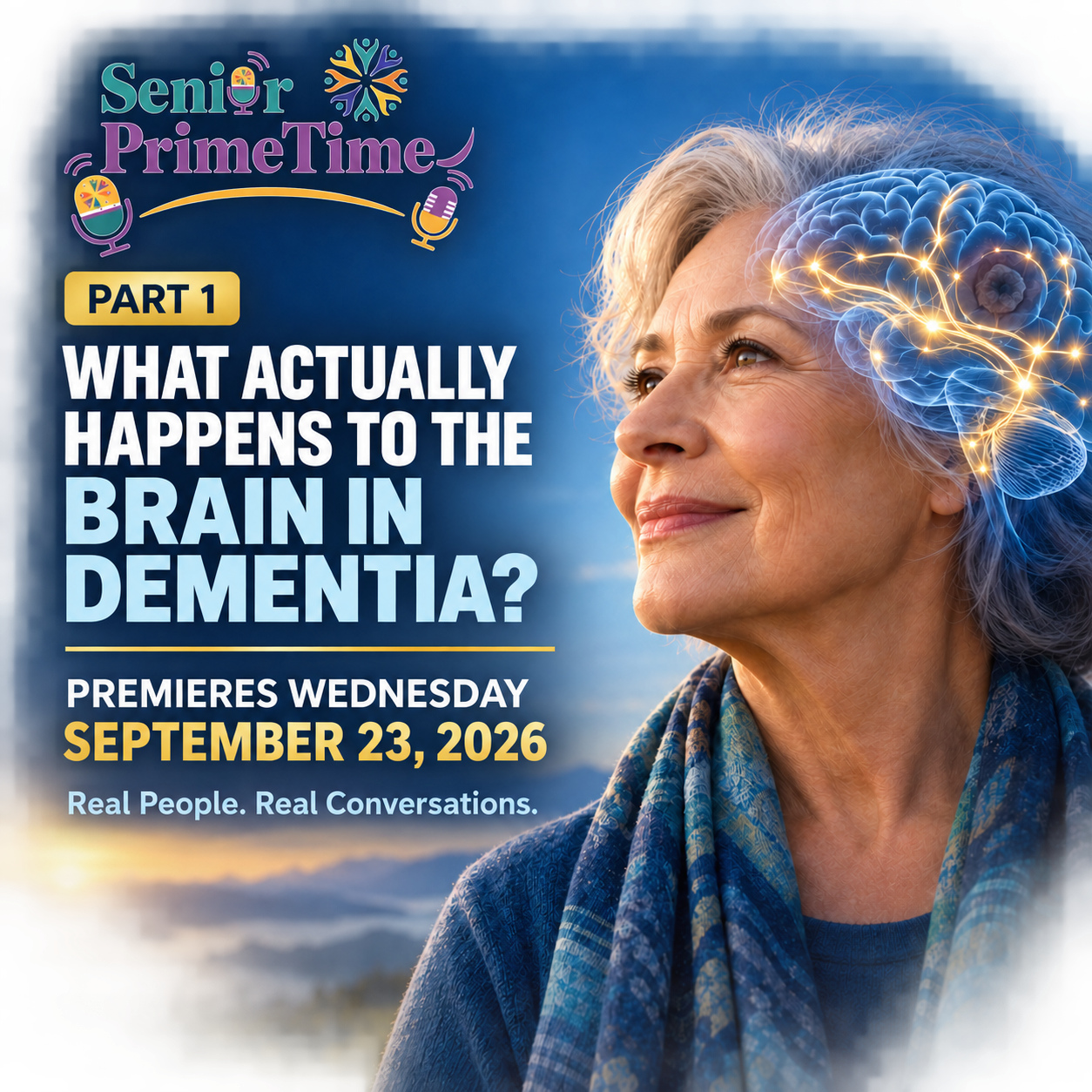
What Actually Happens to the Brain in Dementia?
Part 1 premieres Wednesday, September 23, 2026.
A misplaced name or forgotten errand does not automatically mean dementia. The key is whether changes become frequent, progressive, and disruptive to everyday life.
Have you ever walked into a room and forgotten why you went there, searched for a familiar name, or wondered where you left your keys? For many adults over 55, a moment like that can bring an immediate question: Is this normal aging, or could it be something more?
In Part 1 of this Senior PrimeTime conversation, host Bonnie Keith speaks with two experienced cognitive-health and dementia-care professionals about how the brain changes, which warning signs deserve attention, and why families should seek answers without panic or shame. The discussion also explores cognitive reserve - the brain's ability to adapt, use alternate pathways, and continue functioning even when age or disease creates challenges.
Normal Aging and Dementia Are Not the Same
A healthy brain changes over time. Processing speed may slow, multitasking may feel harder, and a word may take longer to surface. In normal aging, however, the information often returns and the person remains able to manage familiar responsibilities.
Dementia is different. It is an umbrella term for changes in memory, thinking, language, judgment, or behavior that interfere with daily life. Alzheimer's disease is the most common cause, but it is not the only one. Cognitive symptoms can also be affected by medication side effects, depression, sleep problems, hearing loss, infections, nutritional deficiencies, vascular disease, and other treatable conditions. That is why an individualized medical evaluation matters.
More Typical of Normal Aging
A Pattern Worth Discussing With a Clinician
Temporarily forgetting a name, then recalling it later
Repeatedly forgetting familiar names or common words
Needing time to learn a new device or app
Losing the ability to complete familiar tasks
Occasionally misplacing an item
Putting items in unusual places and being unable to retrace steps
Forgetting the date, then remembering
Becoming confused about time, place, or familiar routes
Making an occasional poor decision
Ongoing changes in judgment, finances, medication use, or safety
What Changes Inside the Brain?
The brain is made of billions of neurons communicating through intricate networks. In neurodegenerative diseases, those cells and connections become damaged over time. The pattern depends on the disease and the part of the brain involved. In Alzheimer's disease, early changes often affect regions important for learning and forming new memories, including the hippocampus. As disease progresses, additional networks involved in language, reasoning, orientation, and daily function may be affected.
Brain scans may show loss of tissue volume, widening spaces between the brain's folds, or enlargement of fluid-filled ventricles as surrounding tissue is lost. At the microscopic level, Alzheimer's is associated with abnormal amyloid plaques between neurons and tau tangles inside them. These changes disrupt communication and contribute to cell injury and death.
A scan alone does not tell the entire story. Clinicians consider medical history, changes observed over time, cognitive testing, daily function, laboratory findings, imaging, and - when appropriate - newer biomarker tests. The goal is not to label a person from one symptom. It is to understand the cause and determine the most useful next steps.
Cognitive Reserve: The Brain's Built-In Detour System
Cognitive reserve describes the brain's ability to cope with damage by working more efficiently or recruiting alternate networks. Think of a city with many connected roads: if one route closes, traffic has other ways to reach its destination. A richer network does not guarantee that dementia can be prevented, but it may help explain why people with similar levels of brain pathology can experience different levels of difficulty in everyday life.
Reserve is shaped across a lifetime through education, meaningful work, physical activity, social connection, continued learning, and other mentally engaging experiences. The encouraging message is that brain-healthy choices remain worthwhile at every age.
Practical Ways to Support Brain Health
Move regularly. Aerobic activity, strength work, balance training, and even shorter “exercise snacks” support circulation, mobility, mood, and overall brain health.
Protect heart and vascular health. Work with your healthcare professional to manage blood pressure, cholesterol, diabetes, smoking, and other cardiovascular risks.
Treat hearing loss. Hearing difficulty can increase cognitive strain and social isolation. Ask about hearing evaluation and appropriate devices rather than simply withdrawing from conversation.
Prioritize restorative sleep. Persistent sleep problems deserve attention because sleep supports memory, mood, and the brain's normal maintenance processes.
Choose nourishing foods and stay hydrated. Emphasize vegetables, fruits, whole grains, healthy fats, and minimally processed foods while following individualized medical advice.
Stay socially connected. Conversation, relationships, volunteering, clubs, and community participation exercise multiple brain systems while supporting emotional well-being.
Keep learning. Choose activities that require attention, practice, and growth - a language, instrument, dance sequence, class, new technology, or unfamiliar creative skill.
Review medications and mood. Ask a qualified professional whether medications, depression, anxiety, or another health condition could be affecting thinking or alertness.
Brain-health habits reduce risk and support function; they do not guarantee prevention or reversal. Persistent or worsening cognitive changes should be evaluated by a qualified healthcare professional.
Meet the Guests
Sivana Lavine Waller, MPH
Sivana Lavine Waller is a Senior Program Manager with the Alzheimer's Association California Southland Chapter. She brings an education and public-health perspective to the conversation, helping listeners understand warning signs, evaluation, diagnosis, brain-health habits, support resources, and important developments in Alzheimer's detection and treatment.
Guest contact: (818) 446-1573 | sclavine@alz.org
Alzheimer's Association: alz.org
24/7 Helpline: 800-272-3900
Ronda P. Wilkin, RCFE, CDP, CADDAT
Ronda P. Wilkin is a dementia partner, care-management professional, and senior advocate. Her practical, family-centered perspective helps caregivers navigate difficult conversations, resistance to help, changing behaviors, safety decisions, care transitions, and the ongoing work of preserving dignity and connection.
Guest contact: (818) 667-9133 | ronda@dementiapartner.com
About the Foundation for Senior Services
Senior PrimeTime is presented by the Foundation for Senior Services, a 501(c)(3) public charity dedicated to helping older adults age with dignity, independence, and access to trusted support. Led by CEO and Executive Director Joyce Robertson, the Foundation connects seniors and families with education, community programs, and vetted professionals through its Senior Specialists Group.
The Foundation's Age Well Academy offers educational classes and discussions on brain health, caregiving, movement, nutrition, planning, safety, loss, connection, and other topics that matter to older adults and their families. Its Social Call Companion program also helps address isolation and loneliness by connecting older adults with volunteer callers.
Foundation for Senior Services
Website: FoundationForSeniorServices.org
General information: (855) 836-0807 | info@TheFSS.org
CEO and Executive Director: Joyce Robertson | (323) 363-4316 | Joyce@TheFSS.org
Nonprofit status: 501(c)(3) public charity | Tax ID 46-1816118
Listen to Senior PrimeTime on your favorite podcast platform
Hosted by Bonnie Keith, Senior PrimeTime brings older adults, family caregivers, and adult children real conversations with experienced professionals. Each episode offers understandable information, practical guidance, helpful resources, and realistic hope for the many challenges and opportunities of aging.
Part 1 premieres Wednesday, September 23, 2026. Find the episode and show notes through the official links below:
Website Publishing Notes
Suggested SEO title: What Happens to the Brain in Dementia? Normal Aging, Cognitive Reserve and Brain Health
Meta description: Learn how dementia changes the brain, how it differs from normal aging, and which practical habits may help support cognitive reserve and lifelong brain health.
Suggested excerpt: Not every forgotten name signals dementia. Senior PrimeTime explores what changes inside the brain, which warning signs deserve attention, and how everyday habits can support cognitive resilience.
Suggested URL slug: what-happens-to-the-brain-in-dementia-cognitive-reserve
Suggested categories: Brain Health; Dementia and Alzheimer's; Healthy Aging; Family Caregiving