Alzheimer’s, Dementia, and Memory Changes: Understanding the Basics
Alzheimer’s, Dementia, and Memory Changes: Understanding the Basics
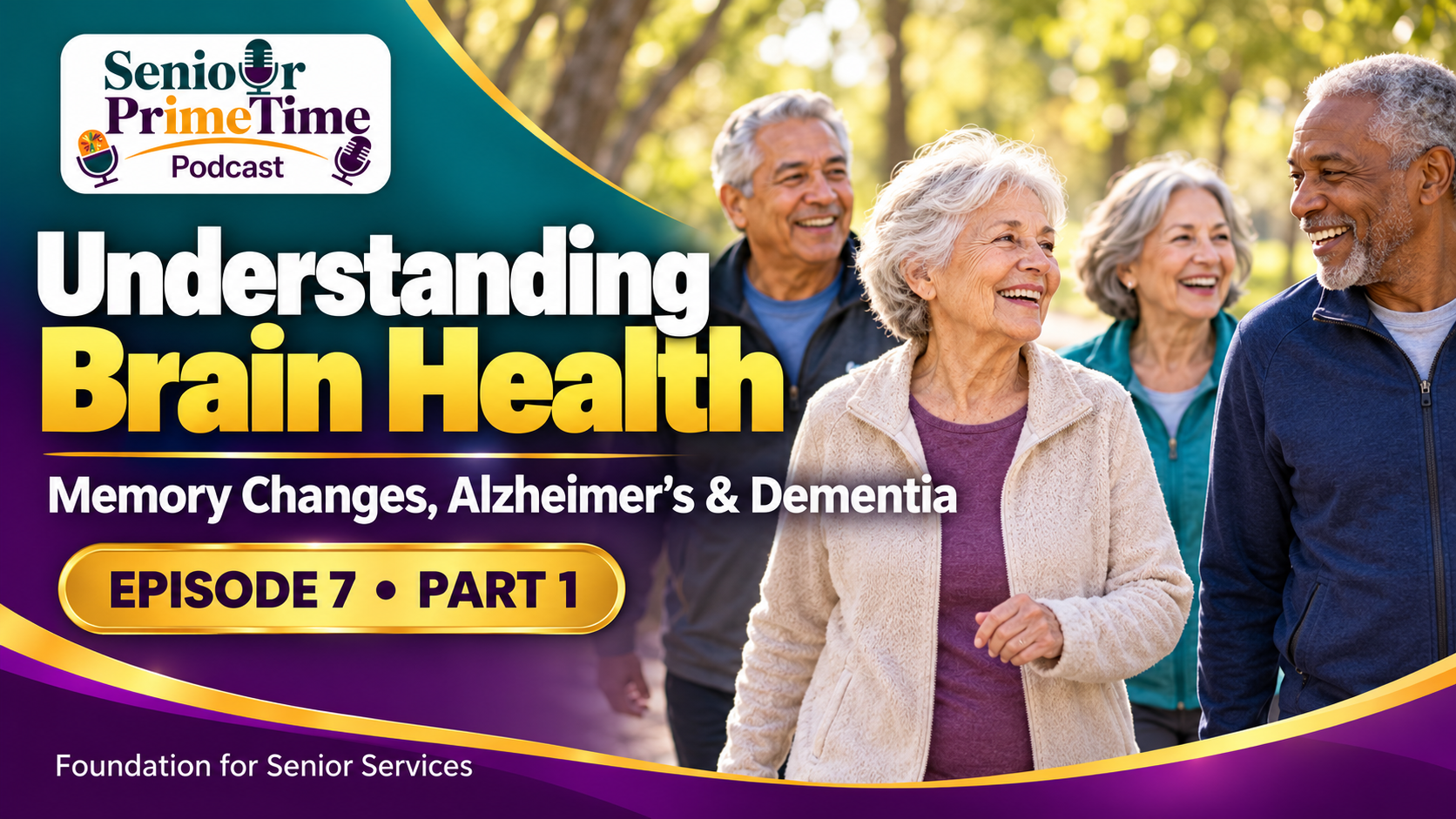
Senior PrimeTime — Episode 7, Part 1
By the Senior PrimeTime Team
You forget a name. Someone you love repeats a question. A familiar task suddenly seems more difficult.
It’s easy for your mind to jump to the question: Could this be Alzheimer’s?
Knowing what to make of memory changes can feel confusing. In Part 1 of Senior PrimeTime Episode 7, host Bonnie Keith welcomes Sivana Lavine Waller, MPH, and geriatric care manager Ronda Wilkin for an approachable conversation about brain health, Alzheimer’s, and dementia.
The goal is simple: help people understand the terms, make sense of common concerns, and feel more comfortable asking questions.
Are Alzheimer’s and dementia the same thing?
These words are often used interchangeably, but they mean different things.
Dementia is a general term for a decline in memory and other thinking abilities serious enough to interfere with everyday life. Alzheimer’s is a specific disease and the most common cause of dementia.
Understanding that distinction gives families a starting point. It also helps explain why dementia alone doesn’t tell the whole story about someone’s condition.
What about ordinary forgetfulness?
Not every forgotten word or misplaced item means someone has dementia. Some changes in memory can occur with aging. But changes that disrupt daily life deserve attention rather than being dismissed as just getting older.
This conversation explores the difference between normal age-related changes and potential warning signs, helping listeners better understand why context matters.
If you’re concerned, talking with a healthcare professional is a more useful next step than trying to diagnose yourself or someone you love from a checklist.
Brain health is part of everyday life
The episode also looks at the connections between brain health and the rest of our lives, including cardiovascular health, hearing, movement, food, and social connection.
Brain health isn’t only something to think about after a diagnosis. It belongs in our broader conversations about how we live and age.
Healthy habits may support cognitive health, but they are not a guarantee against Alzheimer’s or other causes of dementia. The aim is to understand what may help without creating unrealistic promises or blame.
Meet the guests
Sivana Lavine Waller, MPH, joins us from the Alzheimer’s Association, California Southland Chapter, bringing information about Alzheimer’s and resources available to individuals and their loved ones.
Ronda Wilkin, RCFE, APR, CDP, CADDCT, is a geriatric care manager who brings a practical perspective on older adults’ needs and the concerns families face.
Together with Bonnie, they make room for the questions people may have been hesitant to ask.
Start with understanding
Whether you’re thinking about your own brain health, noticing changes in a parent, or supporting a partner, this episode is an invitation to begin the conversation.
You don’t need to know the terminology before listening. That’s what we’re here to help with.
Then continue with Part 2 for more conversation about a subject that touches so many families.
About Senior PrimeTime
Hosted by Bonnie Keith, Host and Creative Visual Director, Senior PrimeTime brings professional perspectives and personal experiences together in conversations about aging.
The podcast is brought to you by the Foundation for Senior Services, which offers education through Age Well Academy and connections to resources from vetted senior services specialists.
Senior PrimeTime. Real people, real conversations.